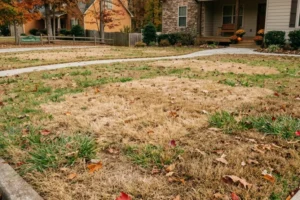

Remember it is extremely important to keep your lawn free of leaves. Leaf accumulation can be detrimental to both warm and cool season lawns.
While warm season lawns need leaf removal, it is even more important on cool season lawns. For Cool Season lawns, fall is a time of repair and growth from the summer stress. Keeping the lawn leaf free, helps the grass receive much needed sunlight. It is even more important for newly seeded lawns as an accumulation of leaves can lead to the death of newly germinated grass seeds.
Local area lawns (warm season) are beginning to lose their color and full dormancy is just around the corner. This is a very important time for treatment on soon to be dormant lawns. This treatment will help protect the plant system from the winter “chill” by toughening the cell walls. This will also allow the turf to come out of dormancy quicker in the spring.
Cool season fescue lawns that are being seeded in the fall should be seeing new growth very soon from the seedlings that were planted. Weeds might also emerge with these new seedlings.
Pre-emergent herbicides cannot be used on cool season lawns due to the fact that they will prohibit new fescue seed germination. Post-emergent sprays have to be used very lightly as well because the new grass must mature enough to be able to withstand the strength of the herbicide. Damage or death can be caused by herbicides used on newly planted, immature tall fescue. After the fourth mowing of newly planted Fescue (about 6 weeks after planting) post-emergent weed control can be applied to rid of weeds.
Keep an eye out for moles this fall. Moles can be very troublesome as they dig tunnels through the lawn that are not only unsightly but that can also damage the turf and create an uneven lawn. Moles are carnivores that feed on earthworms, grubs, ants, beetles, and other subterranean insects (as well as millipedes, slugs, snails).
If North Georgia happens to receive an ice or snow storm this winter, be careful with salt products that are applied to melt ice. If these salt products spread into the grass it can cause major damage. Use only enough salt to get the job done, as high quantities will damage a lawn very quickly.