North Georgia summers can do a number on a lawn. One week, the grass looks thick and green, then suddenly you see brown patch areas spreading across the turf. A lot of folks call us thinking their whole lawn has a fungal disease, but many times the grass is only dormant from heat stress. This is one of the most common concerns we encounter while providing professional lawn care services in Dawsonville, especially during periods of extreme heat and limited rainfall.
We just finished checking a centipede lawn last week after several days of high humidity and heavy rainfall. The homeowner thought a fungus had infected the whole yard. After walking the property and checking the soil and thatch, it turned out part of the lawn was going through heat dormancy, while another section had brown patch disease starting near a shady spot.
That happens a lot here in Georgia. Warm weather, humid air, and rising temperatures create favorable conditions for both heat stress and fungal growth. The tricky part is that both problems can look almost the same from the road.
What Does Heat Dormancy Look Like?
Heat dormancy happens when grass slows down to protect itself from warmer temperatures. This is common in warm-season turf across the Southeast during long dry spells or extreme heat.
Why Does Grass Go Dormant?
When the soil gets too hot and dry, the grass starts saving water and energy. This thermal adaptation helps the lawn survive until better weather returns.
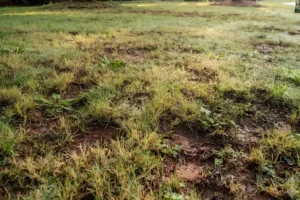
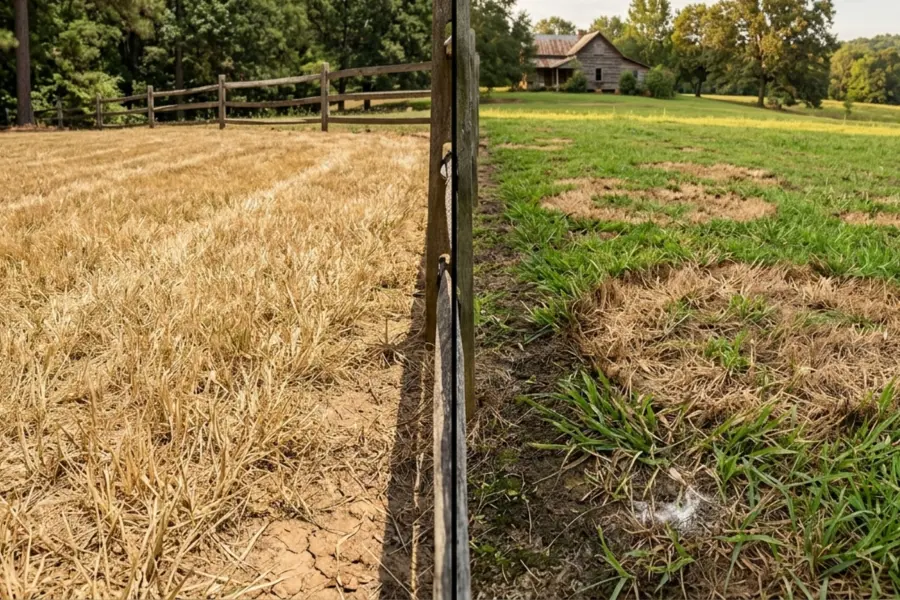
Dormant grass turns tan or light brown. The color change usually happens evenly across large sections of the lawn.
The grass blades stay dry and firm. They do not look slimy or rotten.
The roots are still alive. A healthy root system means the lawn can recover after rainfall or watering.
We just worked on a lawn where the customer thought large patch disease had infected the entire yard. After a quick sample check, the grass was simply dormant from heat stress and compact soil.
Does Dormant Grass Spread?
No. Heat dormancy does not spread like a disease-causing organism. The lawn may look rough, but the brown areas usually stay steady unless the heat gets worse.
What Does A Fungal Disease Look Like?
Fungal disease is different because a fungal pathogen attacks the grass itself. In North Georgia, fungi thrive during humid weather with high humidity and wet soil.
What Are Common Lawn Fungus Problems In Georgia?
Brown patch, dollar spot, and large patch are some of the most common lawn disease problems we diagnose.
Brown patch creates circles or patches. The edges may look darker than the middle.
Dollar spot leaves small, pale spots. These spots can grow together and weaken the turf.
Large patch disease attacks warm-season grass. Centipede lawns are very susceptible during wet weather.
What Causes Fungus Growth?
Fungal species love moisture, thick thatch, and poor airflow. Extra debris in the lawn can also trap water and induce fungal growth.
A humid week with warm nights can create favorable conditions fast. Add too much fertilizer or overwatering, and the lawn becomes high-risk for infection.
We just treated a property where a sprinkler ran every night for two weeks straight. The lawn stayed wet, fungi thrive in that kind of setup, and the turf developed brown patch disease within days.
How Can You Tell The Difference Fast?
The biggest clue is how the lawn behaves.
Check The Pattern
Heat stress usually appears evenly across the lawn. Fungal disease often forms circles, rings, or strange patches.
Look At The Grass Blades
Fungus can create mold or fuzzy growth. Early morning moisture may reveal fungal growth on the blades.
Dormant grass looks dry but clean. There is no mold, slime, or rot.
Test The Soil
Dry hard soil points toward heat stress. Wet, soggy soil with heavy thatch often points toward disease.
Watch For Spreading
A fungal pathogen spreads when the weather stays humid. Dormant grass normally does not spread in circles.
Why Is Lawn Fungus Getting Worse In Georgia?
Warmer temperatures and a warming climate are helping some fungal species evolve and spread faster across the Southeast.
Research from places like the National Institutes of Health has studied how fungi adapt to heat through things like melanin production and thermal barrier protection. Some species isolated in laboratory studies even show higher heat tolerance over time.
That may sound like heavy microbiology talk, but it matters for lawns too. A fungal pathogen that handles heat well can infect turf during long humid summers.
Does Fungus Affect Public Health?
Most lawn fungus stays in the grass and soil. Human infection from lawn fungi is rare for healthy people, though some invasive fungal species can affect people with weak immune systems.
Homeowners who want to better understand common turf diseases such as brown patch, dollar spot, and other fungal issues can review educational resources from the University of Georgia Turfgrass Disease Information. For most homeowners, the bigger issue is damaged turf, ugly patch areas, and costly repairs.
What Can Homeowners Do To Prevent Lawn Disease?
Disease prevention starts with simple proactive measures.
Water early in the morning. Wet grass overnight increases susceptibility to fungal disease.
Reduce thatch buildup. Thick thatch traps moisture and feeds fungal growth.
Avoid cutting grass too short. Weak turf becomes more susceptible to disease.
Improve airflow around the lawn. Trim back plants and remove debris.
Use preventive fungicide applications when needed. Some lawns near wooded areas or golf course-style landscapes may need seasonal prevention.
We just installed a treatment plan for a customer dealing with recurring dollar spot and solani-related lawn issues. After improving watering habits and adding preventive care, the turf started filling back in within weeks.
When Should You Call A Lawn Professional?
If the lawn keeps getting worse after watering or rainfall, it is time to diagnose the problem correctly.
A professional can inspect the turf, check the soil, isolate the issue, and determine whether the lawn is dormant or suffering from disease. In some cases, laboratory testing may even be used to identify specific fungal species or pathogens that cause infection.
One thing many homeowners overlook is how many nutrients weeds can steal from healthy grass. Understanding the relationship between weed pressure and nutrient availability can help explain why some lawns struggle to bounce back.
Catching a fungus early can help manage damage before the lawn gets wiped out.
Frequently Asked Questions About Lawn Care
1. Can heat stress make a lawn turn brown?
Yes. Heat stress can make grass go dormant and turn brown during very hot weather. The roots are often still alive even when the turf looks dry.
2. Can lawn fungus spread quickly in humid weather?
Yes. High humidity and wet soil create favorable conditions for fungal growth. Some lawn disease problems can spread across turf within days.
3. Can a dormant lawn recover without treatment?
Yes. Many dormant lawns recover after steady rainfall and cooler weather return. Proper watering and healthy soil also help the grass bounce back.
Protect Your Lawn Before The Damage Gets Worse
North Georgia lawns go through a lot during the summer. Heat stress, high humidity, heavy rainfall, and fungal disease can all hit at the same time. It is good that most lawns can recover when the problem is caught early.
At ALF Lawn & Pest Solutions, we spend a lot of time walking properties, checking turf conditions, and helping homeowners figure out what is really happening in their lawn.
If your lawn has brown spots, patchy grass, or signs of fungus, give us a call at (844) 369-8873. We are happy to inspect the lawn, diagnose the issue, and help manage the problem before it spreads.