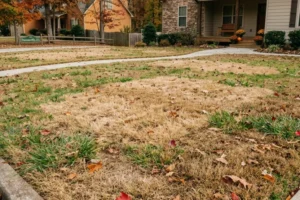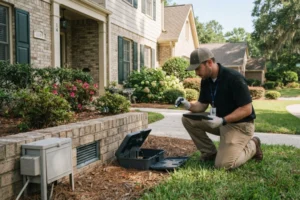

Every October, our phones start ringing with the same worry. A homeowner looks outside and sees a green lawn fading into crunchy brown grass. At ALF Lawn & Pest Solutions, we recently inspected three yards in Dawsonville, and each one had a different problem.
As a professional lawn care company, we know that brown grass before winter can be caused by dormancy, drought, pests, or disease. The good news is that many of these problems can be treated once we identify the cause. Let’s find out what is turning your lawn brown.
Is Your Grass Just Going Dormant?
What Dormant Grass Looks Like
Some grass is supposed to turn brown in fall. As the University of Georgia explains, warm-season grasses naturally turn brown during winter dormancy. Bermuda and zoysia often develop tan blades as temperatures cool, even though their roots remain alive. Give a few blades a gentle tug. If they hold tight, your lawn is only sleeping.
Which Type of Grass Do You Have?
Knowing your type of grass matters a lot. Fescue, ryegrass, and Kentucky bluegrass are cool-season grasses, so they should stay green into winter. If those turn brown now, something else is going on.
Could Drought Stress Be the Cause?
Signs of Drought Stress
After a hot summer, many Dawsonville lawns are still tired. Here are the signs we look for:
Folded grass blades show up when the plant is trying to save water, and they often look gray or blue before they turn brown.
Footprints that stay on the lawn mean the grass is too dry to bounce back.
Dry, hard soil tells us the soil is dry deep down and the roots are not getting a drink.
How Much Water Does Your Lawn Need?
Most lawns need about one inch of water a week, and that counts rain too. We just installed a new sprinkler system for a family near Highway 53, and their old irrigation was only wetting half the yard.
Water early in the morning so the sun does not steal it. Short, daily watering sessions are not as good as deep ones twice a week. Also, an overwatered lawn can turn brown too, so more water is not always better.
Is a Lawn Disease Causing the Brown Spots?
Fungus Loves Our Weather
Georgia is warm and humid, and that makes a happy home for fungus. A fungal disease can spread fast when the grass stays wet at night. Poor air circulation makes it worse. When we treat a lawn, we first check how the yard drains and where the shade falls.
Common Lawn Diseases
These are the diseases we see most in this area:
Brown patch makes round patches of brown, often with a dark ring, and it loves tall fescue.
Summer patch attacks the root system during hot weather, and the damage often shows up later.
Necrotic ring spot creates rings of dead grass that keep growing year after year.
Are Pests Eating Your Grass Roots?
Grubs and Chinch Bugs
Sometimes the cause of brown spots is hiding under the surface. White grubs are small, curled worms that chew the roots, so the grass lifts like loose carpet. Chinch bugs are tiny insects that suck the juice out of grass blades in sunny spots.
Sod webworms also nibble the blades at night. An infestation can look like drought, so we always peel back a small piece of turf and look before we treat.
Could Your Lawn Care Habits Be the Problem?
Mowing, Thatch, and Compact Soil
Small habits can stress the grass. Here is what we see most:
Mowing too short exposes the roots to summer heat and makes the lawn vulnerable to disease.
Excessive thatch is a thick layer of dead stems that blocks water and nutrients from reaching the soil.
Compact soil is very common in our red clay, and it keeps plant roots from growing deep.
Poor fertilizing can leave the grass hungry, or burn it if too much fertilizer goes down at once.
Seasonal lawn care also means planning for weeds. Understanding how pre-emergent weed treatments prevent spring weed growth can help you prepare for a healthier lawn when warmer weather returns.
How Aeration Helps
Aeration pulls tiny plugs of soil out of the ground so air, water, and food can reach the roots. Fall is a great time to aerate and add grass seed to fescue lawns.
We just did this for a Dawsonville customer, and the thin patches filled in within a couple of weeks. Real change often takes two to three weeks, so give your lawn some time.
Frequently Asked Questions About Lawn Care
1. Can brown grass turn green again?
Yes, it can. If the roots are still alive, the grass will often come back with proper watering and lawn care. Dead grass will not return, so it may need new seed.
2. Is a brown lawn always a sign of disease?
No, it is not. Drought, pests, dormancy, and even mowing mistakes can cause the same look, so a close check is the best first step.
3. Should I water more if my grass is turning brown?
No, not always. Too much water can feed fungus and drown the roots, so check the soil first.
Let’s Get Your Lawn Green Again
Brown grass before winter feels scary, but it is usually fixable once you find the real cause. Whether it is drought stress, a hungry grub, or a sneaky fungus, a healthy lawn starts with the right plan.
At ALF Lawn & Pest Solutions, we do this work every day for neighbors in Dawsonville, and we love seeing a tired yard bounce back.
Call us today at (844) 369-8873 for a lawn check. We will take a look, tell you the truth, and help your lawn go into winter strong.