
Rodents can get into a Gainesville home through very small openings. Working with a professional pest control specialist in Gainesville can help identify those entry points, remove food and shelter sources, and address rodent activity before it becomes a bigger problem.
Living in Gainesville, GA means dealing with warm weather, wooded areas, older homes, new construction, and plenty of places where rodents can find food and shelter. That can make rodent problems show up when you least expect them.
A mouse does not need much room to get inside. If there is a small gap around a pipe, vent, door, roof area, or foundation, it may be enough. We see this during our regular work. A homeowner may hear scratching in the attic or find a few droppings in the garage. Then we take a closer look and find an opening that was easy for a mouse to use.
That is why prevention matters.
Why Do Rodents Get Into Gainesville Homes?
Rodents are always looking for three simple things: food, water, and shelter.
Warm Homes Give Rodents Shelter
When outdoor weather changes, rodents may look for a warmer place to stay. Attics, crawl spaces, garages, and wall spaces can give them a quiet place to hide.
Small openings matter. A mouse can squeeze through a space that may seem far too small for a full-grown mouse.
Food attracts rodents. Pet food, bird seed, trash, crumbs, and food stored in open containers can give mice and rats a reason to stay nearby.
What Does Professional Rodent Prevention Include?
Good rodent prevention starts with finding the cause of the problem. We inspect areas where rodents often enter and look for signs that show us what is happening.
We Look For Entry Points
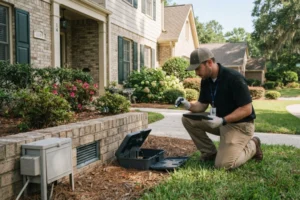
We check places such as roof edges, vents, doors, utility lines, pipes, crawl spaces, and areas around the foundation.
Entry points tell a story. Fresh droppings, rub marks, nesting material, and damage can help us figure out where rodents are moving.
Sealing matters. Once problem areas are found, proper exclusion work can help stop rodents from using the same opening again.
We Check For Signs Of Activity
Rodents can leave more than droppings behind. We may find chewed materials, nesting areas, tracks, stains, or damaged insulation.
Signs help us act early. Finding these clues before a rodent problem grows can make the job easier for the homeowner.
Why Is Prevention Better Than Waiting?
Waiting can give rodents time to settle in and reproduce. One small problem can turn into a much bigger one when rodents have steady access to food and shelter.
We recently worked on a property where the signs pointed to a small opening near an exterior area. The opening did not look like much, but it gave rodents a simple path inside. We addressed the problem area and focused on preventing the same issue from happening again.
That is the kind of work we like to do.
Prevention saves trouble. Finding and fixing access points can help reduce the chance of repeated rodent activity.
Early action can protect your home. Rodents may chew wiring, damage insulation, soil stored materials, and leave waste in areas where people live.
Preventive pest management can also be useful for other common home pest concerns, including termites. You can learn more about the benefits of Sentricon termite control for homeowners and how preventive treatment can help protect a property.
Can Rodent Prevention Help Protect Families And Pets?
Prevention can help reduce the chance of rodents entering spaces used by your family and pets.
Rodents can carry germs and leave droppings and urine behind. Keeping them out is a smart step for a cleaner home.
At ALF Lawn & Pest Solutions, we also pay close attention to safe treatment practices around homes with children and pets. Every property is different, so we focus on the conditions we actually find instead of taking a one-size-fits-all approach.
What Can Gainesville Homeowners Do Between Services?
Homeowners can make their property less inviting to rodents by keeping food stored properly and checking for possible openings.
Store food tightly
Keep pet food, pantry items, and other food in sealed containers.
Keep trash closed
Rodents are good at finding easy meals, so secure trash cans and clean up food spills.
Check your home
Look around doors, vents, pipes, roof areas, and the foundation for gaps or damage.
Watch for signs
Scratching sounds, droppings, chewed items, and nesting material should not be ignored.
Homeowners looking for additional prevention tips can also review the CDC’s guide to sealing homes against rodents, which covers entry points, food sources, garbage, and other practical ways to make a home less inviting to mice and rats.
Frequently Asked Questions About Pest Control
1. Can mice enter through very small gaps?
Yes. Mice can fit through surprisingly small openings, so small gaps around pipes, vents, doors, and other areas can give them access.
2. Does rodent prevention help stop future problems?
Yes. Finding entry points and reducing access to food and shelter can lower the chance of rodents returning.
3. Can rodents damage a home?
Yes. Rodents can chew materials, damage insulation, contaminate areas with waste, and sometimes chew electrical wiring.
Stop Rodent Problems Before They Start
Rodent prevention is a smart choice because it focuses on stopping the problem before it becomes a bigger headache. Instead of waiting until mice or rats have made themselves comfortable, we can look for the reasons they are getting inside and address those areas.
That is how we approach rodent work at ALF Lawn & Pest Solutions. We inspect, explain what we find, and recommend practical steps based on the property.
If you are hearing scratching, finding droppings, or simply want to make your Gainesville home less inviting to rodents, call us at (844) 369-8873. We are happy to take a look and help you decide what makes sense for your home.