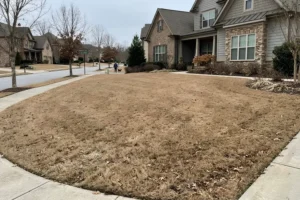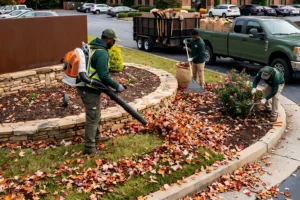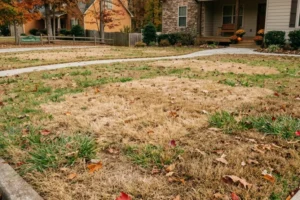
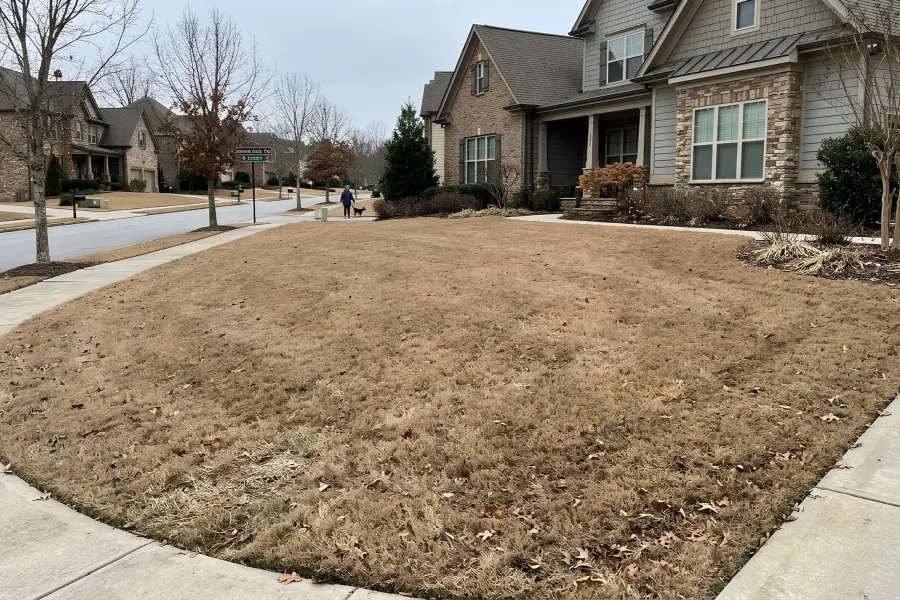
Every November, our phones start ringing. A property manager looks out the window, sees a brown lawn, and fears the worst. Here is the good news. Brown grass in wintertime is often normal, and sometimes it points to a problem we can fix. At ALF Lawn & Pest Solutions, our commercial property maintenance services keep lawns around Cumming, GA healthy through the cold months. Just last week, we walked a property where the whole lawn had turned tan, and it was perfectly healthy. Let’s go over why this happens and how to help your lawn.
Why Does My Lawn Turn Brown in the Winter?
Most of the time, your lawn turns brown because it is taking a nap. Cooler weather tells the grass to slow down, save energy, and wait for warm days.
Dormancy Works Like a Long Sleep
When grass goes dormant, the leaves stop growing, and the green color fades. The roots stay alive underground, so the grass may look sad while the plant is only resting. Dormancy is how turf protects itself from extreme temperatures.
Your Grass Type Matters
We just treated a Bermuda yard that turned tan after the first frost, and the owner was shocked. It was normal for that grass type.
Zoysia and Bermuda are warm-season grasses, so they turn tan or brown when cooler weather arrives.
Fescue, bluegrass, and ryegrass are cool-season grasses, so they usually stay dark green longer, even in the winter months.
Is My Brown Grass Dormant or Dead?
It is hard to tell by looking, so we use two quick checks on almost every job.
Try the Tug Test
Grab a small handful of grass and pull gently. Dormant grass is well-rooted and stays in place. Dead grass lifts easily, almost like a loose carpet.
Check the Soil
Push a screwdriver into the ground. If the soil is dry and hard, your lawn may not be getting enough water. If the screwdriver slides in with ease, the roots likely have enough moisture.
What Else Causes Brown Spots in My Lawn?
Sometimes brown areas have nothing to do with dormancy. These are the lawn problems we see most.
Lawn Fungus
Fungal disease loves humid weather. Brown patch is a common lawn fungus that leaves round dead spots, and it grows faster when a lawn gets too much high-nitrogen fertilizer. Summer patch is another fungal problem that starts in summer heat and shows up later. A good fungicide can stop the spread.
Hungry Bugs
Pests love to chew on a stressed lawn. Here are the ones we find most often.
Grub worms eat grass roots, so the turf feels spongy and lifts easily.
Billbugs dig into the stems and leave patchy, thin areas.
Sod webworms munch on the blades and cause brown grass that looks ragged.
Other Common Culprits
A few small things can also cause brown spots, and they are easy to miss.
Thatch is a layer of old grass and roots, and excessive thatch blocks water and air from reaching the soil.
Dog urine can burn grass and create bright yellow or dead spots.
Sprinkler problems like broken sprinkler heads or spotty sprinkler coverage leave some areas dry while others stay soggy.
Drought stress happens when rainfall is low and the grass is not getting enough water.
How Can I Prevent Brown Grass in Winter?
You cannot stop dormancy, but you can help your lawn stay strong and bounce back faster. We just did this exact plan for a family nearby, and their lawn looked much better by spring.
Water the Right Way
Proper watering matters even in cold weather. Dormant grass needs less water, but it still needs enough moisture, so run your irrigation system once in a while when rainfall is low. This helps conserve the roots until the soil warms up.
Try Aeration and Smart Mowing
Aeration pokes small holes in the soil so air, water, and food can reach the roots. If you are wondering whether to mow a lawn turning brown, the answer is to keep the blades at a normal height until growth stops. Then give the mower a rest.
Feed at the Right Time
The right fertilizer at the right time makes a big difference. We like to feed in late fall so roots stay strong, and we skip heavy nitrogen when humid weather is still around. Good timing in spring and fall keeps lawns healthy all year. Lawns that hold up best through winter are usually the ones where fall maintenance started early, before the leaves piled up and the soil cooled down.
Every grass type follows its own winter schedule. Clemson Cooperative Extension’s Bermudagrass yearly maintenance program shows what a warm-season lawn needs from dormancy through spring green-up.
Frequently Asked Questions About Commercial Maintenance Services
1. Will my brown lawn turn green again in spring?
Yes, a dormant lawn usually wakes up when the soil warms up. Most lawns recover on their own, and a little care helps them green up faster.
2. Is dormant grass the same as dead grass?
No, dormant grass is alive and only resting. Dead grass has no living roots and will not grow back, so those dead spots need new seed or sod.
3. Should I mow lawn turning brown in winter?
No, once the grass stops growing, there is nothing to cut. Mowing dormant grass can stress the plants and leave the soil open to weeds like crabgrass.
Brown Grass Is Not Always Bad News
A brown lawn in winter is often just a sleeping lawn. When you know your grass type, check for fungus and pests, and water and feed on time, you give your yard the best shot at a strong green color come spring. If those brown areas keep spreading or you are not sure what you are seeing, we are happy to take a look.
Call or contact ALF Lawn & Pest Solutions today at (844) 369-8873 for a friendly yard check. We will find out what is going on and help your lawn get back to a healthy, green lawn.