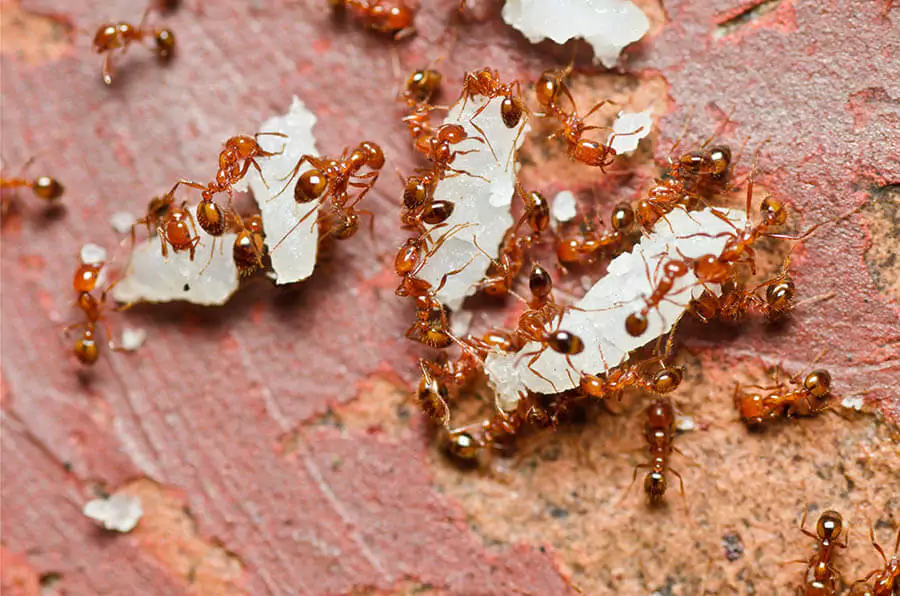
Fire ants are pests in different areas of the United States and worldwide. They tend to invade homes, yards, and other places where they can find food and shelter. Fire ant infestations can be very dangerous for people and pets because fire ants sting repeatedly and will bite if provoked or threatened. In this article, we’ll look at the different factors that attract these insects to your property.
1. Food
Fire ants feed on a wide variety of foods since they are omnivores. You can find them eating different animal and plant matter. Fire ants usually feed on small animals such as crickets, centipedes, and other ant species outdoors. They can even feed on the carcass of large dead animals. In addition to eating meat, they also like to consume fruits, vegetables, seeds, and nuts.
On the other hand, fire ants that infest indoor spaces feed on human food, preferably fatty or oily. These insects like to eat any human food left out, such as bread, meat, sweets, and more. If you have cats or dogs, they can also feed on pet food left on your pet’s dishes.
2. Moist Areas
Another common factor that attracts fire ants indoors is moisture. Some fire ants prefer moist environments since this indicates the presence of water. These insects need water to survive, so they’ll look for places with plenty of it. Wet areas include leaking pipes, humid basements, bathrooms, kitchens, and laundry rooms. It’s best to keep these parts dry to avoid attracting fire ants. Homeowners with standing water near their structures should also ensure that the area has drainage systems installed so that water doesn’t accumulate.
3. Warm Environment
Fire ants like warm environments because this helps them thrive. Their mounds are designed to maintain specific temperatures inside their nests, so they don’t need to worry about the temperatures being too hot. These insects build tunnels that run through soil and rock to create vents. Warm environments also allow ants to keep foraging for food because of the comfortable temperature. Most fire ants like to forage for food in temperatures between 72°F and 96°F.
4. Scent Trails
Fire ants leave scent trails when they travel from one part of a nest to another. These trails contain chemicals called pheromones that ants use to communicate and coordinate activities within their colonies. These chemical signals help workers recognize each other and move toward the source of the signal.
Fire ants are attracted to scent trails, so it’s important to clean your house regularly so that you can remove those traces. Cleaning eliminates the smell that attracts ants and prevents them from building new colonies.
Fire Ant Control at ALF Lawn & Pest Solutions
Our team at ALF Lawn & Pest Solutions is here to help when it comes to controlling fire ant populations. We offer pest control services in Cumming, GA that safely and effectively eliminate fire ants. Our certified technicians are trained to identify fire ants and understand how to prevent them from spreading throughout your home or business. Contact us today at (844) 369-8873 to know more.