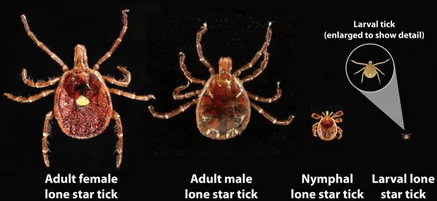
Tick season is upon us again. Because of our mild winter, experts predict that this year’s tick season will be more active than the last couple of years. Ticks get a lot of the media attention this time of year because of Lyme Disease and Rocky Mountain Spotted Fever. The University of Georgia reports that the most common Southeastern ticks that spread these diseases are the Lone Star, American Dog, and the Black Legged Ticks.
There are basically four life cycles to the tick. The first being the egg stage. A mass egg drop from a female can be upwards of 6,000 eggs at one time. The mass group of eggs is typically dropped in grassy or wooded areas. Within about two weeks, the eggs will hatch into a seed tick. The seed tick will typically congregate in the area where they were hatched. They’ll climb shorter grasses or brush and wait for smaller hosts. After they latch to a host, they quickly grow and move to the nymph stage. Once they do, they look for a larger hosts. This is the time the tick looks for larger patches of grass or brush where larger animals such as deer would pass. After the tick finds a larger host, they will continue to feed and develop into a strong adult. High humidity and thick vegetation areas are the best habitats for any tick population. In the right conditions, a tick in any of these stages can wait for a full year to latch onto a host.
It’s important to note that Lone Star and Black Legged Ticks will latch onto humans in any of its life cycles; while the American Dog Tick will typically latch to a human only during its adult stage. If you have to be in areas where ticks may be prevalent, we recommend these steps:
- Wear long pants and keep your shirt tucked into your pants and your pants tucked into your socks.
- Use a repellant with some level of DEET on exposed skin areas.
- Check yourself a couple times a day for any evidence of ticks.
- If a tick does latch on to you. Remove it with tweezers, a cloth, or tissue paper. Then grab the tick as close to the attachment point as possible. Steadily pull away from the skin careful not to jerk or twist. You do not want to leave any parts of the tick’s mouth on your skin. Then disinfect the area immediately and wash your hands thoroughly.
- Lastly if you start to get symptoms of rash, fever, headaches, or muscle pain, you need to see a physician immediately.
ALF is committed to helping you protect your family through the summer months. If you feel that our Flea and Tick services would be beneficial to you. Please call us at (844) 369-8873 and we’ll provide you the best service in the business.