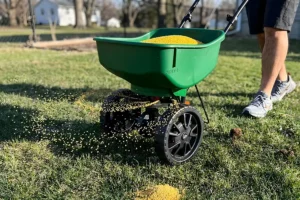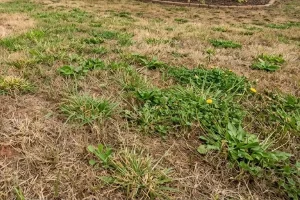
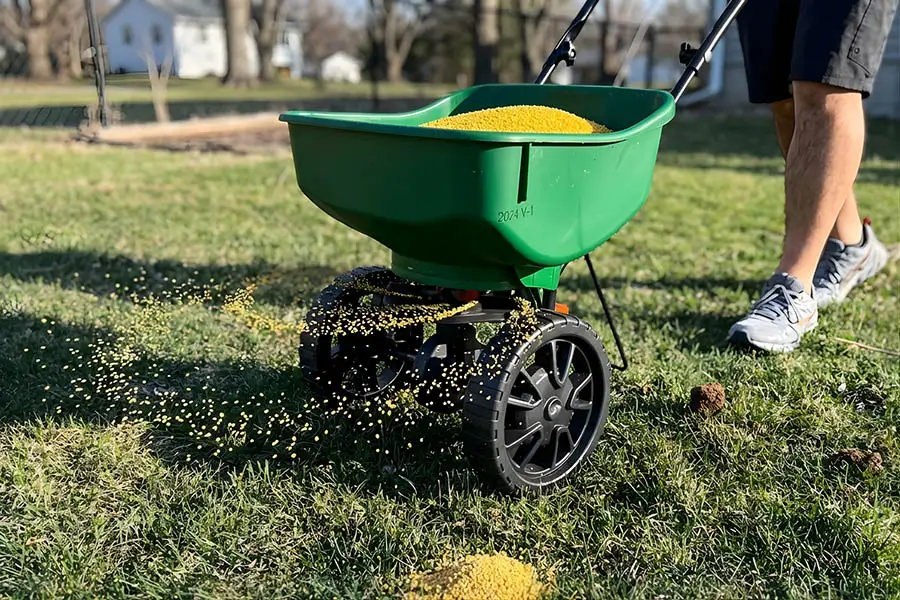
If you live in Dawsonville, you have probably noticed that not all lawns look the same. Some are thick and dark green. Others look thin or patchy even when they get water. A big reason is the type of grass and the fertilizer used on it, which is why choosing the right lawn fertilizer service can make a noticeable difference.
Yes, fertilizers are designed for specific grass types in Dawsonville, GA. Using the wrong one can slow growth or cause stress. Using the right one helps grass grow strong roots and stay healthy through our hot summers and cool winters.
At ALF Lawn & Pest Solutions, we match fertilizer to the grass type and soil here in Dawson County. We just installed a new Bermuda lawn off Highway 53 last week, and the first thing we did was choose a fertilizer made just for Bermuda.
What Grass Types Grow Best In Dawsonville, GA?
Warm Season Grasses
In our area, warm-season grasses are the most common. These include Bermuda, Zoysia, and Centipede. They grow fast when it is warm and slow down when it gets cool.
Bermuda grass grows fast and needs more nitrogen to keep its rich green color.
Zoysia grass grows thick and needs steady feeding, but not too much at once.
Centipede grass grows more slowly and needs a lighter fertilizer with lower nitrogen.
We just treated a Centipede yard near downtown Dawsonville, and the owner had been using a high-nitrogen blend made for Bermuda. The grass looked yellow and stressed. Once we switched to a Centipede blend, it started to fill in within weeks.
Cool-Season Grasses
Cool-season grass like Fescue is also found here, especially in shaded areas.
Fescue grass needs fertilizer in fall and spring because that is when it grows most.
Putting summer fertilizer on Fescue during the July heat can burn it. That is why timing and type both matter.
Why Does Grass Type Matter When Choosing Fertilizer?
Each grass type uses nutrients in a different way. Fertilizer is made of three main numbers called NPK. That stands for nitrogen, phosphorus, and potassium.
Nitrogen helps grass grow green blades.
Phosphorus supports strong root growth.
Potassium helps grass handle heat and stress.
Bermuda loves nitrogen during summer. Centipede does not. Fescue needs root support in the fall. When the blend does not match the grass, growth can slow down, or weeds can move in.
We test the soil before we treat many lawns. The red clay soil in Dawsonville can hold nutrients tightly. If we add too much, it builds up. If we add too little, grass starves. Matching grass type with soil condition keeps things balanced.
Can One Fertilizer Work For Every Lawn?
Different Yards Have Different Needs
Even two homes on the same street can have different grass types. One may have full sun. The other may have shade from tall trees.
We just did two lawns in the same neighborhood. One was Bermuda in full sun. The other was Fescue in partial shade. They got two different fertilizer plans on the same day.
Sun exposure changes how grass uses nutrients.
Soil condition changes how nutrients are absorbed.
Grass type controls how fast it grows and how much feeding it needs.
Using a one-size-fits-all product may seem easy, but it often leads to patchy spots or extra weeds.
When Should Fertilizer Be Applied In Dawsonville?
Timing matters just as much as type.
Warm Season Grass Schedule
Warm-season lawns like Bermuda and Zoysia should be fed in late spring through summer when they are actively growing.
We usually start treatments around April once the grass turns green. Feeding too early can push weak growth before roots are ready.
Cool Season Grass Schedule
Fescue lawns should be fed in early fall and again in late fall.
Fall feeding helps roots grow deep before winter. That makes the lawn stronger next spring.
Right timing protects the grass from stress. Wrong timing can cause thin growth or disease.
How Do We Choose The Right Fertilizer At ALF Lawn & Pest Solutions?
We start with a close look at your yard. We look at grass type, color, thickness, and soil feel. We may take a soil sample if needed.
We just finished a full lawn install for a family near Lake Lanier. After laying the sod, we used a starter fertilizer high in phosphorus to build strong roots. That step helps sod take hold faster.
Our team keeps up with local soil data and weather patterns. Years of working in Dawsonville lawns have shown us what works and what does not.
Local knowledge helps us pick the right blend.
Safe products protect kids and pets.
Proper rates prevent overfeeding.
That is how we keep lawns healthy without causing damage.
Frequently Asked Questions About Lawn Fertilizer Service
Are there fertilizers made just for Bermuda grass?
Yes. Bermuda grass fertilizers have higher nitrogen to support fast summer growth. Using the right blend keeps it thick and green.
Can I use the same fertilizer on Centipede and Fescue?
No. Centipede needs lower nitrogen, while Fescue needs feeding during cooler months. Using one product for both can cause stress.
Does the wrong fertilizer really hurt my lawn?
Yes. Too much or the wrong mix can burn grass or cause weak roots. Proper feeding keeps the lawn strong and healthy.
The Right Fertilizer Makes All The Difference
Yes, fertilizers are designed for specific grass types in Dawsonville, GA. Using the correct blend for Bermuda, Zoysia, Centipede, or Fescue helps grass grow thicker roots and greener blades. It also helps lawns handle heat, rain, and foot traffic better.
If your lawn is not looking its best, it may not be the grass. It may be the fertilizer. At ALF Lawn & Pest Solutions, we match the right product to your exact lawn needs. Give us a call today at (844) 369-8873, and let’s build a feeding plan that fits your yard the right way.